“You never know what will land in your lap”: Emily Gray on her first year in the Community News Project
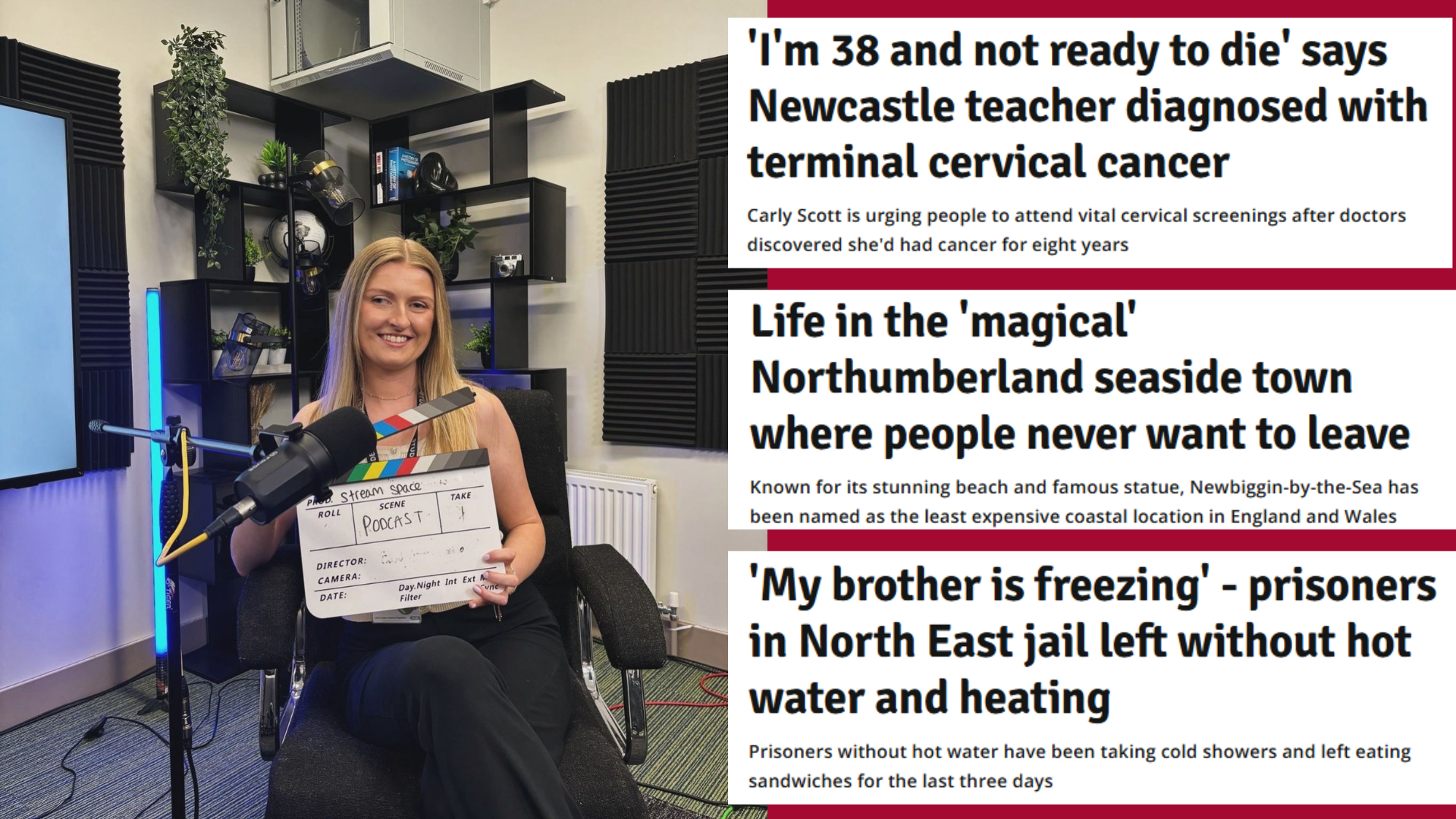
Community news reporter Emily Gray has marked her first year at the Newcastle Chronicle with a record month for online engagement, a growing portfolio of human-interest stories and increasing responsibility in the newsroom.
Emily joined the Chronicle as a Community News Project (CNP) reporter in early 2025 and is combining her role with working towards the NCTJ Diploma in Journalism. In January 2026 alone, her stories received just over 600,000 page views.
“I feel a much better, quicker, more adept writer,” she said. “I’ve built a contact list that means I’m now doing follow-up stories with people I’ve met through the job. You don’t always realise in the moment how much you’ve done until you look back.”
From summer 2025, Emily began taking on weekend shifts, often being the only working reporter, covering live and breaking news. Since November she has also worked early and late shifts.
“The first weekend was quite daunting,” she said. “I’d only been doing nine-to-five in the office. I spent a lot of time with my manager and colleagues looking at how to build a live blog, because I’d never done that before.
“Since then, I feel a lot better and comfortable being by myself to cover those incidents. It’s humbling to be trusted in that position, and it’s really rewarding when editors feed back that they’ve been impressed with how I’ve handled a situation.”
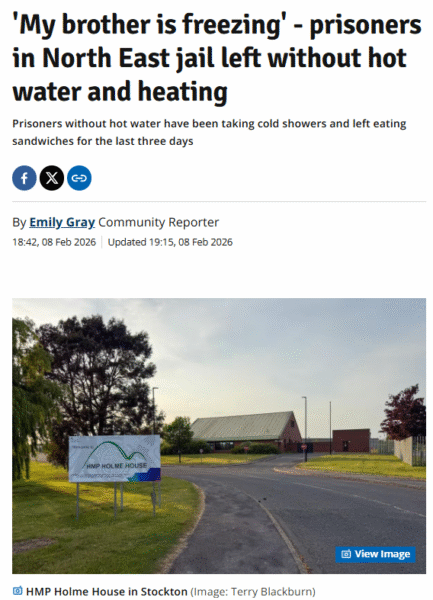
This included her breaking news coverage of a North East prison left without hot water and heating, shared with TeessideLive, and live blogs on major incidents in County Durham and Gateshead.
“It’s nice to compare writing a feature, a more long-form piece, to a breaking news piece and know that I’m able to switch in and out like that,” she said. “It’s nice to have a big collection of different pieces I can put in a portfolio of my work.”
Alongside her newsroom duties, Emily is completing NCTJ training.
“The essential journalism module was really helpful,” she said. “If there’s a breaking incident, your head might scramble, but if you take a step back and remember that good copy always needs the basic five Ws, and it needs to be tight and precise, it really helps.
“Now that I’ve passed my media law, I feel a lot more confident and adaptable tackling some situations, knowing what I can and can’t say. You just feel like you’ve got a good toolkit to go off and confidence in your own writing.”
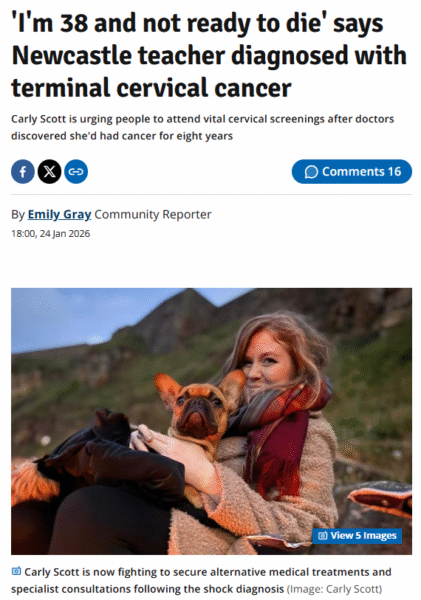 A recent story Emily is particularly proud of is about Carly, who has been diagnosed with terminal cervical cancer aged only 38. Carly’s friend set up an online fundraiser shortly after and Emily has followed her journey .
The feature, published on ChronicleLive, was read more than 15,000 times and was later syndicated across the Reach network, including on the Mirror and Yorkshire Live. Emily then wrote a follow-up piece, speaking to Carly’s friends when she was too unwell to be interviewed herself.
“Despite the situation Carly’s in, it’s nice to know it’s had an impact on people,” she said. “Even if to some people it might not be the most gripping breaking news story, to the people whose story you’re telling it makes a big difference and a big deal. It’s really important to showcase those human-interest stories and give people who might not have the platform for a voice, a voice.”
“It was quite surreal to see my byline in the Mirror,” she added. “Day to day, you don’t really think about it, but then to see your name reach more audiences is quite impressive. It just makes you think how far you can go with this type of career.”
Emily’s patch stretches from Newcastle city centre into parts of Northumberland and County Durham, and she said getting out and meeting people is central to her work as a community reporter.
She said: “Getting out to actually see people on the ground is probably the most important part of the role, because you do connect with people.”
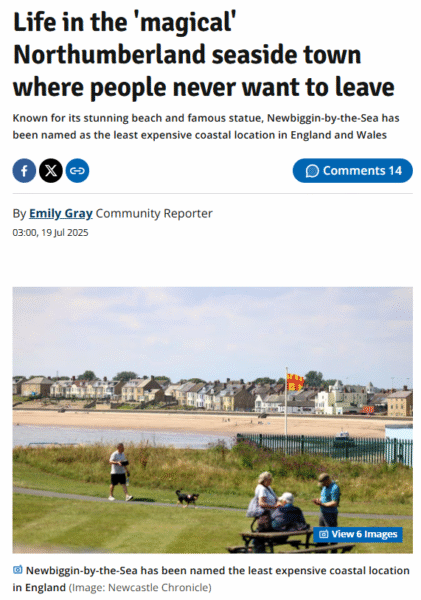 She has been working on a “Life in” series, spotlighting local spots like a Northumberland seaside town, Newcastle’s coolest neighbourhoods and rural villages, with pieces drawing tens of thousands of views.
“People are always positive about showcasing their area, and these visits spark follow-ups and new contacts,” she said. In Ouseburn’s creative hub, one feature led to a video series on artists like glassmakers and potters.
Emily said she is motivated by the chance to tell stories that matter to people on her patch.
“You never know what’s going to land on your lap and whose story you’re going to tell,” she said. “Even if to some people it might not be the most gripping story, to the people whose stories you’re telling it makes a big difference.”
She added that the opportunity to train and work through the Community News Project is something she is determined to make the most of.
“If I look back and think how many steps it took me to get here, and how many people applied for this role, I’ve been handed such a fantastic opportunity to train and work at the same time,” she said. “Why would you give that up? It’s an important part of my career, and it’s exciting to think where I could go in the future.”
A recent message from a friend brought home how much she has achieved in just one year.
“A friend messaged me the other day – he was obviously joking – and said, ‘Which of your articles is best for me to read?’” Emily said. “I sent him the Carly one, because that’s one I’m really proud of. But he said he’d searched my name and I’d written about a thousand articles. It’s crazy to think there are that many pieces attached to my byline. When you take a step back at moments like this, it’s really impressive to think, ‘Wow, I’ve done that.’”
Emily’s reporting for the Newcastle Chronicle can be read here.