

NCTJ publishes Annual Report highlighting commitment to quality, trust and diversity in journalism
This year’s Annual Report underscores the NCTJ’s dedication to attracting, qualifying, and developing outstanding journalists from all walks of life during a period of significant change for the industry.
Joanne Forbes, NCTJ chief executive, says the charity’s reach, influence and impact have grown, reflecting the vital role it plays in supporting and strengthening UK journalism.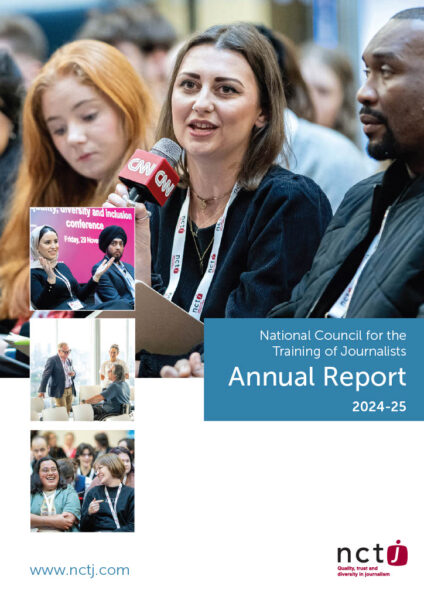
She said: “In a landscape shaped by economic uncertainty, pressure on journalism education and the rapid advance of artificial intelligence, we have shown that the industry can rely on us to uphold high standards and support its changing needs. We are proud of what we have achieved together and encouraged by the growing recognition of the NCTJ as an organisation that strengthens journalism at every level.”
This year, enrolments rose by 13 per cent, with 1,406 students joining accredited courses, while demand for apprenticeships continues to increase. The Journalism Skills Academy has grown in both scale and value, offering 28 e-learning courses built on flexible learning models that widen access to professional development throughout journalists’ careers.
In the chief executive’s review, Joanne highlights the successful conclusion of the Meta-funded stages of the Community News Project in December 2024, which created more than 280 reporter roles and has been widely recognised as a landmark success. Building on this momentum, the NCTJ established a new £450,000 Community Reporting Fund, appointing six community reporters from 500 applicants to work with publishers across England and Wales.
The charity also strengthened its outreach work through the Into Journalism initiative and the Journalism Diversity Fund, which awarded 42 bursaries and enters its twentieth year with strong partnerships.
Reflecting on the year’s achievements, Sue Brooks, NCTJ chair, highlights completing her first year in the role. She says: “The standout moment for me in 2024 was the Awards for Excellence lunch in Manchester. There was a record number of entries, and scores of young journalists were recognised for work ranging from investigations into important social issues to multimedia storytelling using cutting-edge techniques.”
Sue acknowledged that the core skills of journalism remain as vital as ever, even as the industry undergoes rapid change. She said: “Since I started my career more than four decades ago, everything has changed—except the core skills of being a journalist: accuracy, accountability and the search for clarity,” she explains. “These skills remain at the heart of the NCTJ. We will continue to support the sector by equipping journalists with the skills, knowledge and resilience they need, promoting diversity and inclusion, and reinforcing the importance of journalism as a public good.”
Artificial intelligence continues to be one of the biggest challenges for newsrooms. Sue notes: “Our Journalists at Work 2024 research found that 60% of journalists feel they do not yet have a sufficient understanding of AI. Skills gaps were also identified in areas such as analytics, data and video editing. The Journalism Skills Academy is responding to these needs with an ever-updating range of modules and e-learning courses, covering everything from data mining and SEO to leadership skills, helping journalists adapt to the changing demands of the profession.”
Sue concludes: “The only thing that will not change are the NCTJ’s values of quality, trust and diversity. Never have they been more important.”
Click here to read the NCTJ’s annual report 2024-25.