
Media law experts warn of growing legal challenges for journalists
The growing use of data protection law and barriers to open justice are creating new legal and practical challenges for journalists and news organisations, media law experts have warned.
The growing use of data protection law and barriers to open justice are creating new legal and practical challenges for journalists and news organisations, media law experts have warned.
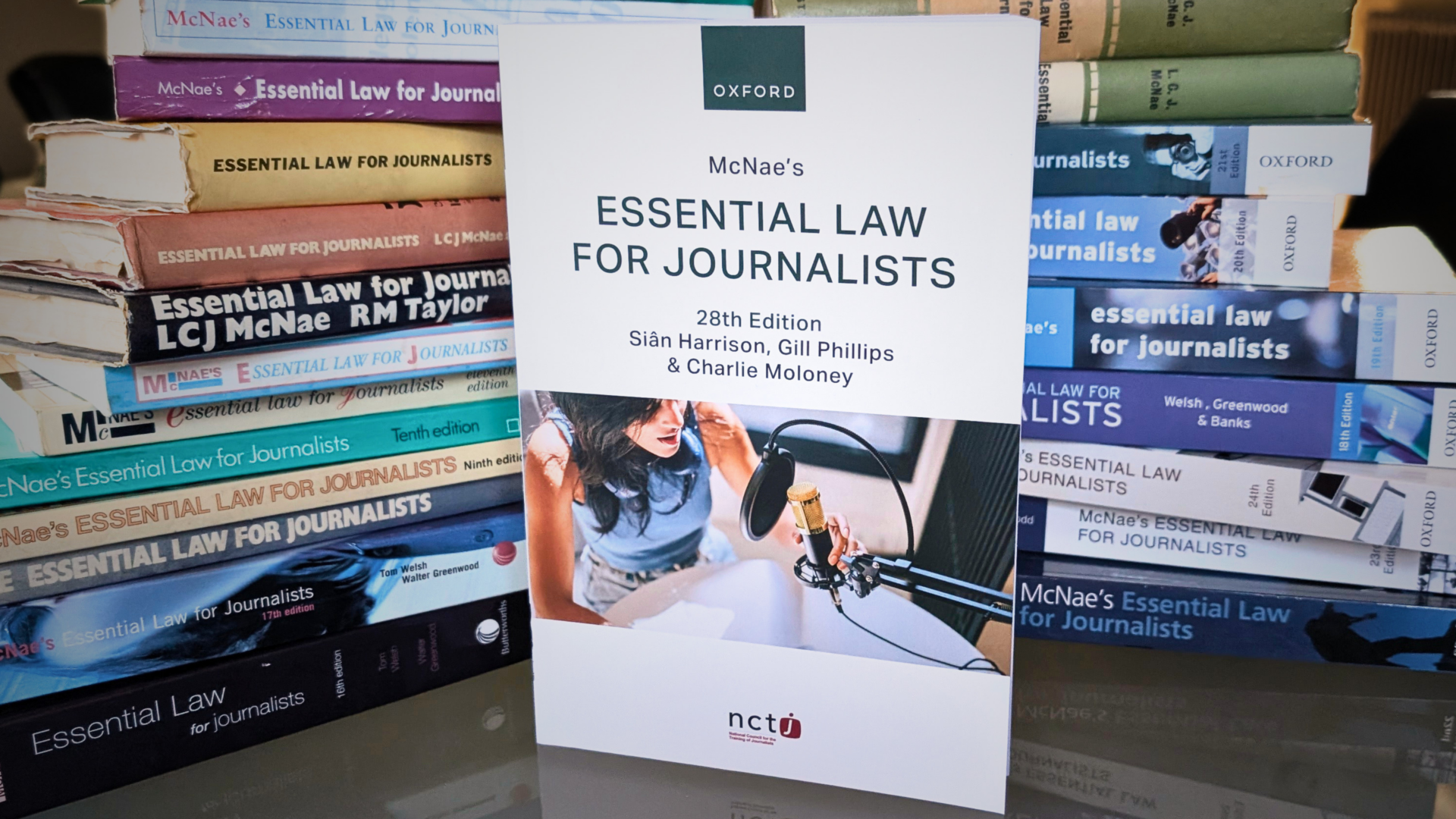
Editors, court reporters, media lawyers, regulators and journalism educators raised concerns about subject access requests, source protection and access to digital court documents during an NCTJ roundtable marking publication of the 28th edition of McNae’s Essential Law for Journalists.
The discussion has now been published in the September edition of British Journalism Review.
One of the strongest themes was the increasing use of data protection law against news organisations, including attempts to obtain information about confidential sources.
 Jim Waterson, editor of independent publisher London Centric, questioned whether GDPR was becoming a new route for legal action against journalists.
He said: “I’m already seeing that GDPR bit creeping into letters that I’m getting from lawyers. You know how to handle a defamation claim, to a certain extent, but you don’t have the toolkit to take on GDPR. It’s a terrifying new world.”
Anne Mannion, senior associate at Lewis Silkin, said news organisations were also seeing a significant increase in subject access requests (SARs).
She said: “We have seen such a rise of them over the last year, driven by AI.”
She described the burden SARs can place on news organisations and discussed the recent Mill Media case, in which the journalism exemption was successfully relied upon when a claimant sought information about sources.
Hugh Carnegy, the Financial Times’ senior editor for quality and accuracy, said his organisation had also seen a “distinct rise” in SARs over the previous 18 months.
He said that while the Financial Times was well resourced to deal with them, “if you’re a smaller organisation, it must be extremely difficult”.
The challenges facing court reporters were another major focus of the discussion.
PA Media courts editor Tristan Kirk highlighted difficulties reporters face when documents are uploaded to digital court systems but remain inaccessible to journalists covering proceedings.
He said: “The real barrier now is to do with digital court systems and our job, which is essentially stuck in the analogue age.”
The roundtable also explored the widening gap between professional journalism operating within legal and regulatory frameworks and information reaching large audiences through social media.
Sian Harrison, managing editor of The Athletic and one of the editors of McNae’s, warned of “this massive gulf between traditional media, who follow the rules, and social media, where there’s massive misinformation”.
Participants also debated recent media law cases, source protection, contempt, access to court documents, the future of court reporting and whether shorthand remains an essential skill for journalists.
Joanne Forbes, chief executive of the NCTJ, said: “The publication of a new edition of McNae’s gave us an important opportunity to bring together people working across journalism, media law, regulation and education to examine the legal and ethical challenges journalists are facing.
“These issues have real implications for reporters and news organisations, from protecting confidential sources to securing access to the information journalists need to report from our courts.
“Bringing together different perspectives helps us understand how these challenges are changing and what journalists need to navigate them.”
The roundtable was hosted by Brunswick and chaired by NCTJ emeritus chair Kim Fletcher.
The full discussion summary, “It’s one battle after another”, is published in the September 2026 edition of British Journalism Review.
McNae’s Essential Law for Journalists, first published in 1954, has guided generations of reporters through the law as it applies to journalism. The 28th edition is edited by Sian Harrison, Gill Phillips and Charlie Moloney and published by Oxford University Press in association with the NCTJ.
Buy the 28th edition of McNae’s Essential Law for Journalists here: https://www.nctj.com/product/mcnaes-essential-law-for-journalists-28th-edition/ .