Lessons learned from my time as a local news reporter
A blog by Mirek Gosney
Mirek developed his journalism skills through the NCTJ’s Community News Project and is now moving on to a new role at Sky. As one of our NCTJ ambassadors, he has championed quality, trust, and diversity in journalism throughout his career in local news.
After three years as a local news reporter, Mirek reflects on the lessons he has learned and shares his perspective on why local journalism remains vital to our communities. His honest insights offer practical guidance for journalists starting their careers in local news.
Lessons learned from my time as a local news reporter
It’s official – I have called it a day after nearly three years working at my local newspaper. Oh no, an em dash. Are they still allowed?
More importantly, what can I say about my experience in local news? “It’s a bit like After Life, innit?” Sometimes, yes. “You guys must be on the big bucks.” Not really, no. I heard these comments a lot starting out. And while there is no better way to start your journalism career, there are realities you should know.
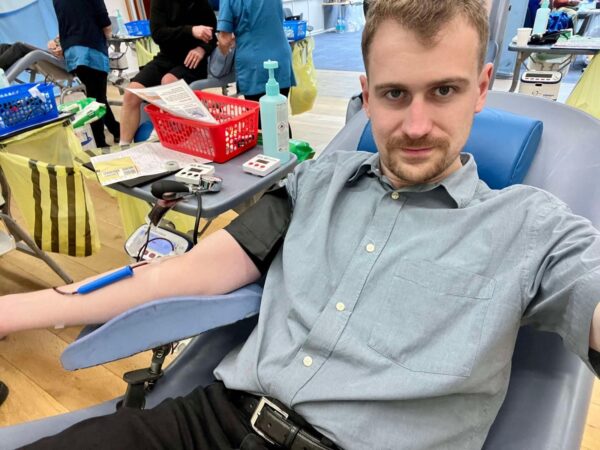
I gave everything to my local newspaper!
The pay is atrocious. So be prepared for that. Local news is also under constant pressure. At least 293 local newspapers have closed in the UK since 2005, according to Press Gazette. The rise of big tech, the pandemic and slashed budgets are partly to blame.
So are those who solely rely on page views to measure audience engagement. They do so at their own peril and will see trust in their brands erode. Some already have. But where there is crisis, there is opportunity. Local newsrooms are crying for innovation. And you can lead it.
Survive and thrive through innovation
I have always advised students at careers fairs to start building their portfolios early. There are many of us trying to break into this game, and the industry favours the bold. So, create a website, write a blog, start a podcast, shoot a TikTok video, experiment with AI. Don’t wait to be told what to do. And for heaven’s sake, publicise it. For trained communicators, we do a lousy job of promoting our work and its impact.
These are all tools which, used wisely, can help bring local newsrooms back from the brink to continue their vital function as the first tier of democracy. Because if we don’t hold local power to account, who will?
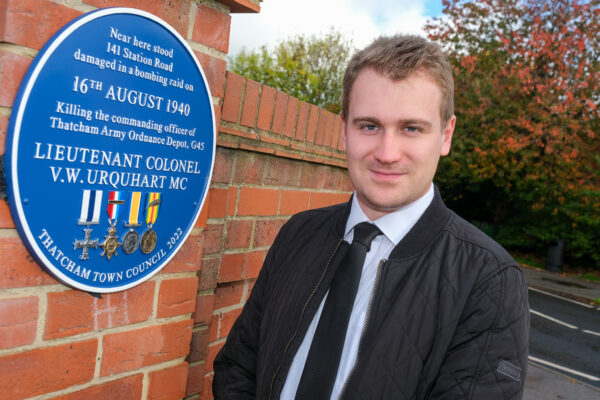
My blue plaque to Thatcham’s forgotten blitz victim
It helps to come into the newsroom with your own niche or specialism. Mine was history. News is the first rough draft of history, as the saying goes, so merging these interests made sense. Between RAF Greenham Common, English Civil War battlefields and two Atomic Weapons Establishments, I was never short of subjects to explore.
My work helped to install a blue plaque for a lieutenant colonel killed in a wartime bombing raid whose death was never properly recorded.
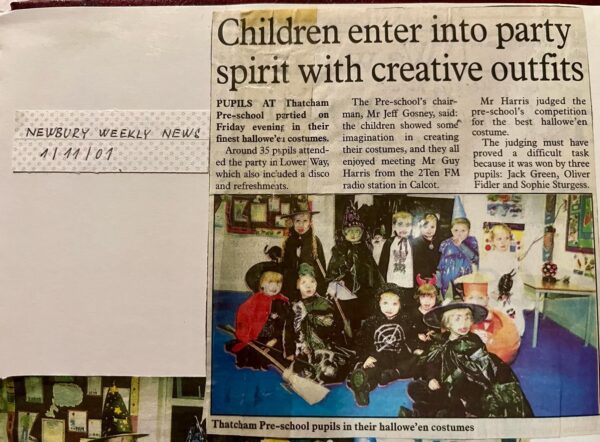
My first appearance in my newspaper
My print features proved popular, and I largely built my contact base from there. A group of teenagers once recognised me in an HMV store from my TikTok series revealing unique trivia about West Berkshire’s heritage. Clearly I did something right.
Get yourself out there
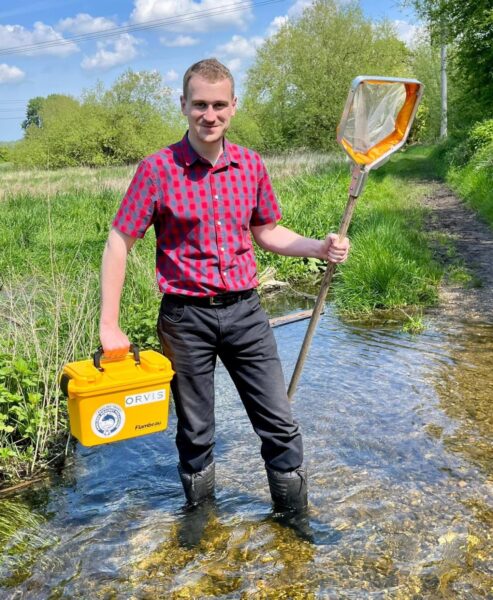
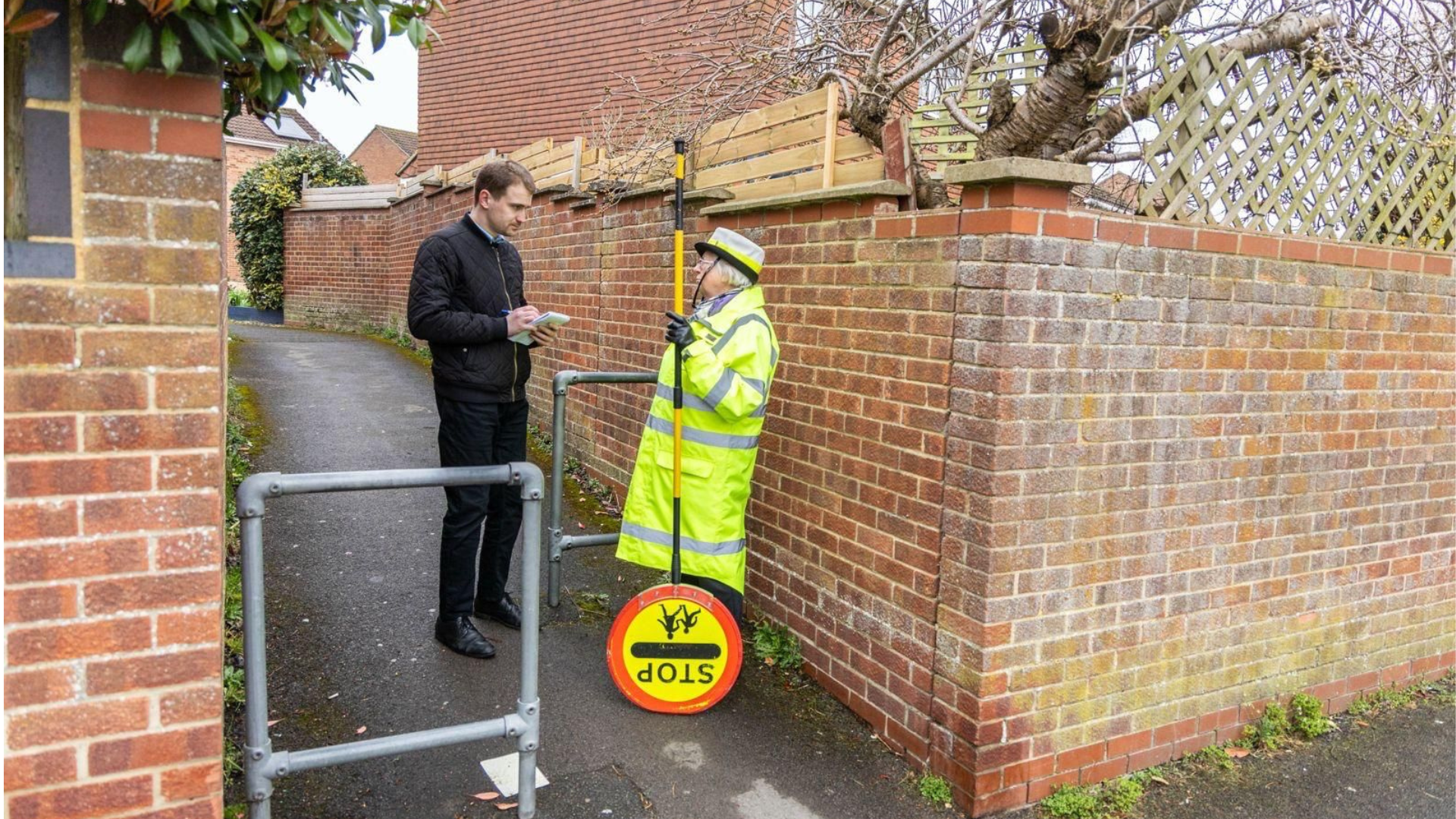
My day in the life of a citizen scientist testing for water pollution
With shrinking newsrooms and social media to compete with, getting out on the job is tricky, but no less essential. I made my closest contacts in the field. I have even attended the funerals of some. Whether it was door knocking in Newbury town centre or steering the narrow country roads to meet residents in the sticks, the stories I actually went out for often weren’t the same ones I returned with.
I learned that the hard way when my car got bogged down on a dead-end track Google Maps had led me down. Big tech strikes again. Some kind farmers took pity on me and towed me to safety with a tractor. I waited until afterwards to tell them I was press.
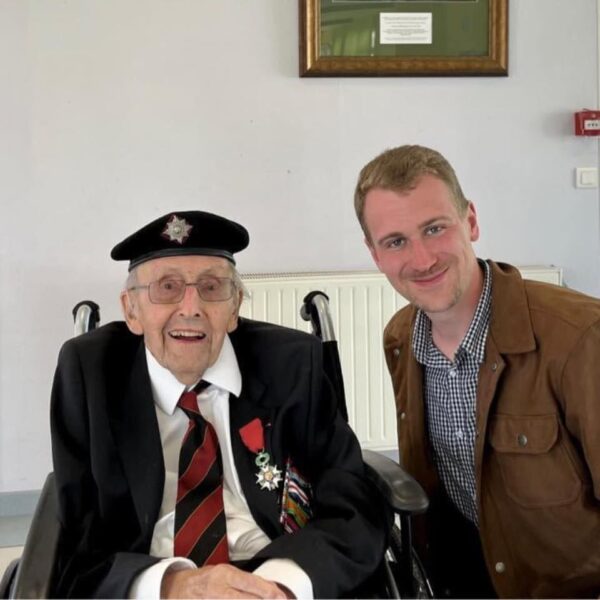
Me and the late D-Day veteran Cecil Newton in Normandy last year
Editors who don’t let their reporters leave the newsroom are doing them and their readers a disservice. Thankfully, I never had that problem.
My advice to new journalists visiting people’s homes: ask whether to keep your shoes on or off, accept any hospitality you’re given (even if you don’t drink tea), and find out where the toilets and exits are.
What’s the top line?
Local news is still the best setting to study your craft, experiment with ideas, learn to listen and figure out what sort of journalist you want to be. Maybe that’s the media innovator, professional nuisance, moral crusader, or a mixture of each.
A work experience student recently asked me how I cope with distressing stories that don’t result in immediate change. I struggled to give an answer, as I had then been grappling with this moral quandary myself. It’s a crushing feeling when a vital piece you have written falls flat or fades from memory after a fleeting buzz. But you never stop trying.
I also realised our actions change people’s lives every day. Whether that’s listening to tenants in a crumbling house who have been ignored by everyone else or helping a man who just wants to see his late wife’s name appear in the paper. Most people just want to be heard.
And it’s that beer coaster philosophy that guides me through to the next stage of my career.
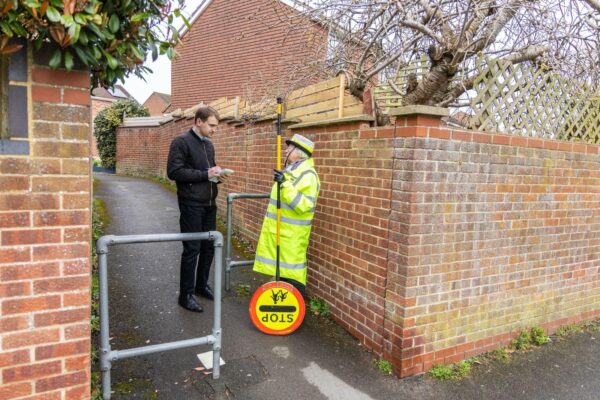
Looks more intense than it was!