Why now?: The need to adapt
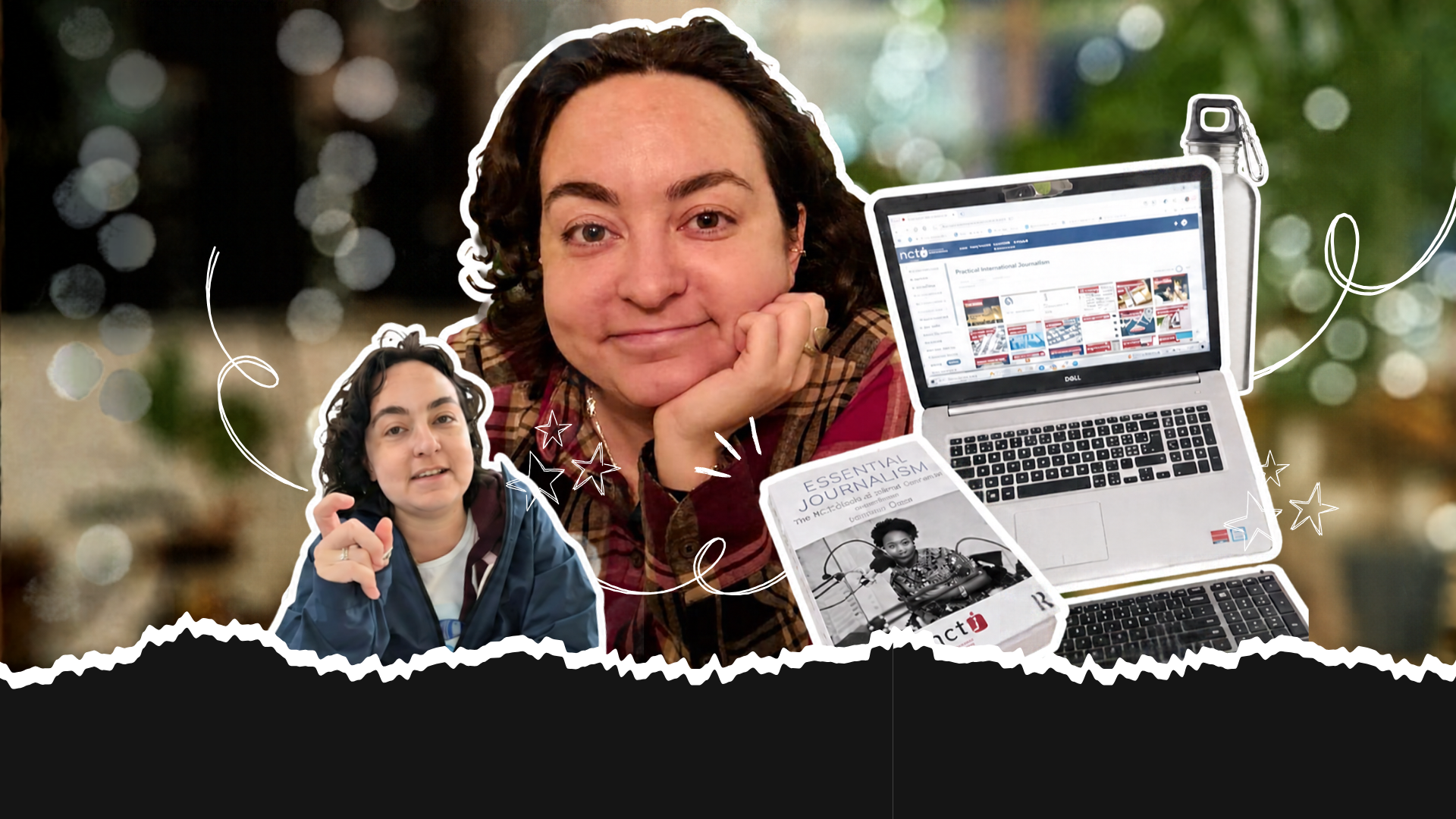
I didn’t take the NCTJ’s Practical International Journalism course looking for a new career break. In fact, I’ve been working remotely as a freelance copywriter since before it was trendy, working for brands like PADI, Huish Outdoors, Fodor’s Travel, World Nomads and as a writing and marketing tutor at the College of Media and Publishing.
However, with AI breathing down my neck, I knew I had to adapt to access more job opportunities. With the aim of writing for print and digital magazines and newspapers, I decided to enrol in an online journalism course.
At the heart of my decision was a genuine desire to learn how to research, structure and write an article that people would want to read.
My non-negotiables
I have family and work commitments that prevent me from attending scheduled weekly classes (even virtual ones) for weeks or months on end.
So my ideal journalism course had to be:
- Accredited
- Credible
- Flexible
- Entirely remote
Too much to ask? Thankfully not, as the NCTJ’s Practical International Journalism course ticks all these boxes.
What it’s like studying journalism via distance learning
There are eight main modules:
- News storytelling
- Features storytelling
- Interviewing skills for all platforms
- Social media and analytics
- Ethics of international journalism
- Media law for the international journalist
- International affairs
- Photography, video and audio skills
Each module is broken down into small chunks, so I can move forward without getting overwhelmed.
Like any reputable course provider, there’s some theory (without being too academic or hard to understand) and recommended reading (I’ve only purchased the main study book, Essential Journalism: The NCTJ Guide for Trainee Journalists).
Otherwise, all units comprise of quick exercises, real-world examples, videos and quizzes. For example, the interviewing skills module includes Andrew Mountbatten-Windsor’s fateful 2019 BBC interview with journalist Emily Maitlis as a case study. I had already seen the interview, but rewatching it from a journalist’s perspective was fascinating. I noticed how Emily got answers from Andrew.
This NCTJ online journalism course focused on the core skills of gathering, verifying and reporting information. It’s practical and straightforward, which is exactly what I signed up for!
Plus, I found the student platform easy to use and navigate. You can mark each chapter or section as ‘complete’ to keep track of your progress and pick up where you left off.
To pass the course, you need to submit a single portfolio with five articles that cover the skills taught across the modules.
The future
Just six months on from starting the NCTJ’s Practical International Journalism course, and I’m currently working on my final assessment portfolio. I haven’t published anything as a journalist – yet. But this hasn’t stopped me from pitching news stories to big and small publications.
A year ago, this would have been unimaginable because I knew I didn’t have the skills to deliver a well-researched and polished article.
I’ve already received positive replies from editors, which is encouraging and gives me confidence in my writing career.
If you’re considering this course, perhaps, like me, you’ll discover that you’re capable of more than you think. It is never too late to develop new skills and whatever you decide to do, I wish you the very best in the future.